

- Sector
- Education
- Project type
- Refurbishment
- Services provided
- Site survey
- Design
- Project management
- Product / system manufacture
- Product / system supply
- Installation
- Project location
- South East England
- Client
- Oxford University
- Products used
- Nor-Ray-Vac
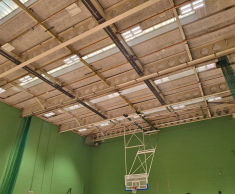
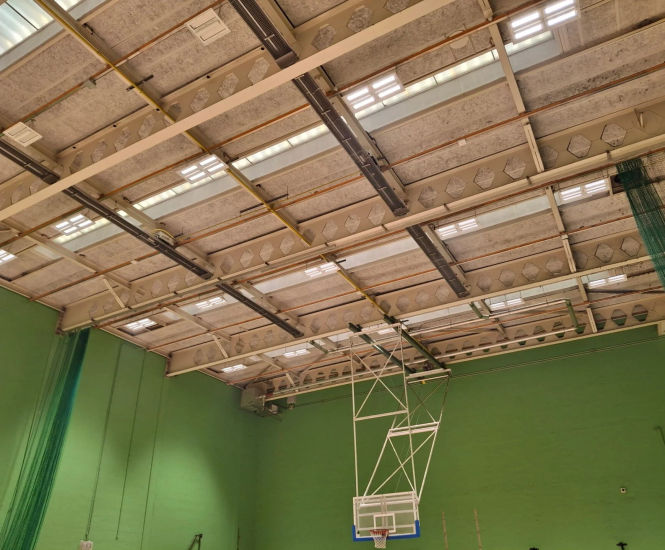
The Iffley Road Sports Centre at the University of Oxford is the location where Roger Bannister ran the first sub-four-minute mile in 1954. The centre's gymnasium had relied on a Nor-Ray-Vac (NRV) radiant heating system for over 25 years. As the system aged, several burner units stopped firing correctly, resulting in uneven heat distribution across the space. The facility remained in continuous use throughout, which added pressure to find a solution without disrupting operations.
The Challenge
An ageing NRV radiant tube heating system with declining performance
Inefficient energy use and inconsistent temperature control across a large open space
A requirement to keep the sports hall operational during the works
A preference from the university for a like-for-like system replacement rather than a full redesign
The university asked specifically to retain the Nor-Ray-Vac system, in order to avoid the cost and disruption of a different heating approach.
Objectives
Replace the existing system with a modern, energy-efficient, modulating Nor-Ray-Vac unit
Preserve the original system design concept
Improve comfort levels across the sports hall
Increase system reliability
Limit downtime in a facility that remained in active use
Solution
The project began with a site survey, followed by a heating system design based on the existing layout and performance data. The resulting installation included six 24kW modulating Nor-Ray-Vac burners, along with updated technical specifications aligned with EN 777, the European standard covering multi-burner systems. The design used targeted infrared heat distribution, allowing the system to reach operating temperature quickly and burn fuel at the point of use, rather than relying on centralised heating plant with associated distribution losses.
Implementation
Installation was phased to work around the sports hall's ongoing use. Considerations during this phase included maintaining safe working conditions in an active environment, limiting disruption to scheduled sports and student activities, and integrating the new equipment with existing infrastructure. The Reznor service team carried out commissioning as part of the installation process.
Results
Reduced heat loss and improved energy efficiency
More consistent infrared heating performance
Improved thermal comfort throughout the sports hall
Reduced maintenance requirements associated with newer equipment
A longer expected lifespan for the heating system
Client Feedback
The university reported high satisfaction with the upgrade, noting improvements in comfort and reliability, along with appreciation for retaining a heating approach it was already familiar with.