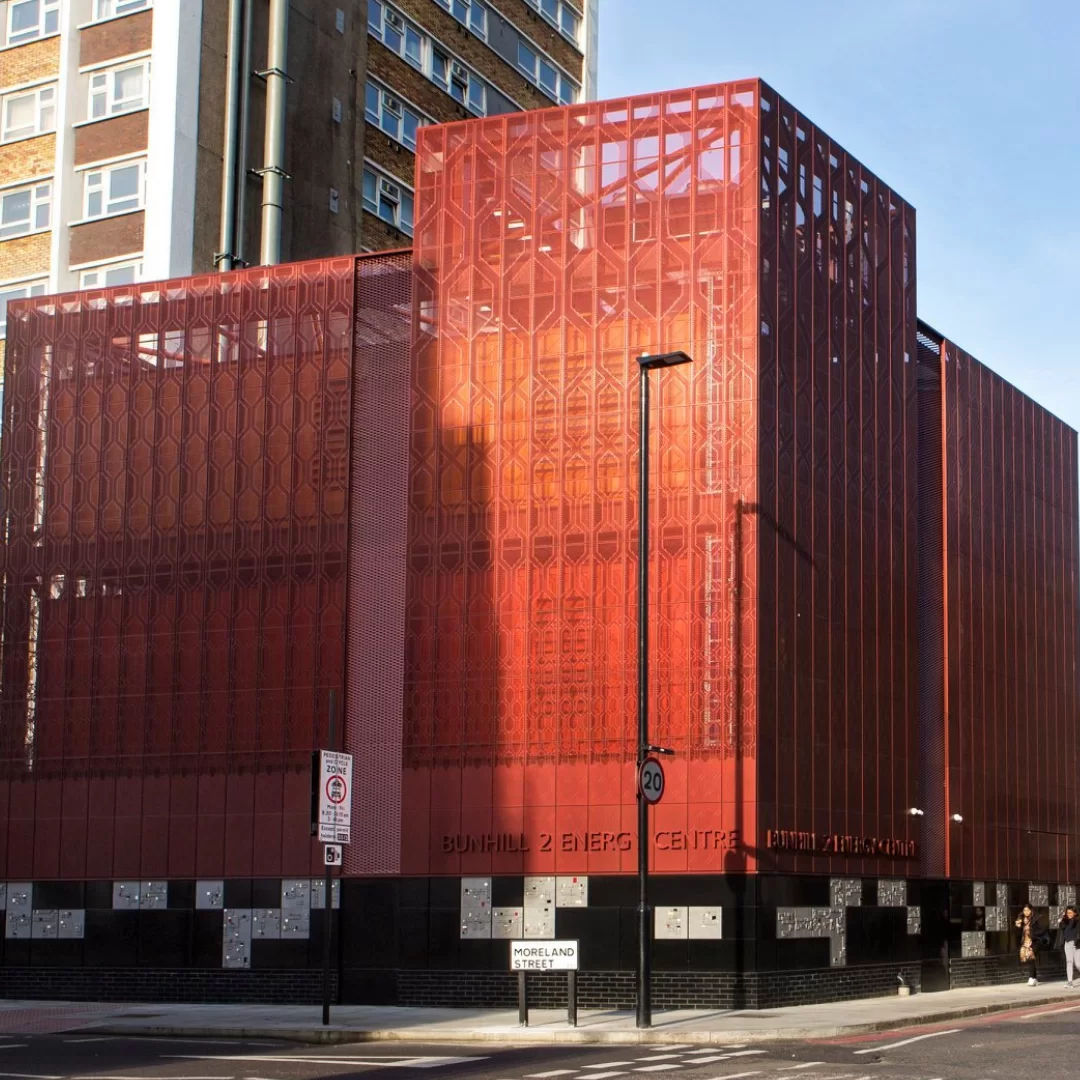
Colloide developed the Bunhill 2 Energy Centre and Heat Network for Islington Council
As the UK moves closer to its Net Zero goals, it is essential to ensure that buildings are designed with the future in mind. One of the most effective ways to do this is by making buildings “heat network-ready.”
Heat networks are increasingly recognised as a solution for decarbonising heating and hot water by harnessing efficient, renewable energy sources.
Beyond reducing environmental impact, they also ensure compliance with new regulations, standards and policies.
The regulatory context: why future-readiness is non-negotiable
The Building Safety Act, which received Royal Assent in 2022, provides a clear framework for the design, construction and long-term management of safer, higher-quality buildings. The Act makes ground-breaking reforms to give residents and homeowners more rights, powers, and protections, so homes across the country are safer.
It strengthens the regulation of construction products, introducing a National Regulator for Construction Products. To provide further oversight the new regime also set up the Building Safety Regulator and the New Homes Ombudsman.
A key feature of the Act is the “golden thread” principle, a digital record of a building’s design, construction and maintenance. This ensures transparency across the lifecycle of a building and provides vital support for integrating low-carbon systems such as heat networks.
Future Homes Standard and decarbonisation targets
Due to begin 2026 and come into full effect by December 2027 or 2028, the Future Homes Standard will require all new homes in England to be zero-carbon ready. Gas boilers will no longer be permitted, and instead, low-carbon heating solutions such as heat pumps, district heating or hybrid systems will become the norm.
The Standard also aims to introduce higher insulation requirements, improved airtightness, and mechanical ventilation with heat recovery (MVHR).
All new developments must adopt Biodiversity Net Gain (BNG) strategies, embedding environmental responsibility into the construction process.
This legislation is expected to transform housebuilding, with direct implications for the rollout of heat networks.
Heat Network (Metering and Billing) Regulations
The Heat Network (Metering and Billing Regulations) was first introduced in 2014 and has been updated in both 2015 and 2020 It’s aim; to improve efficiency and reduce emissions across the sector.
These regulations mandate the use of metering devices across heat networks to ensure that billing is directly linked to a user’s consumption of heat, cooling and hot water. This approach promotes reduced energy usage and carbon footprint while ensuring fairness and transparency in billings. The Heat Network (Metering and Billing) Regulations helps to improve operational standards and sustainability.
Net Zero 2050 commitments and local authority heat network zoning policies
The UK Government has committed to achieving Net Zero carbon emissions by 2050. This includes reducing emissions from public sector buildings by 50% by 2032 and by 75% by 2037 (compared to 2017 levels). With heating in homes and workplaces contributing nearly a third of UK emissions, the decarbonisation of heat is a central priority.
To support this, funding streams such as the Green Heat Network Fund and Heat Network Investment Project have been established to accelerate development and retrofitting. Local Authority Heat Network Zoning policies are helping identify areas where district heating is the most cost-effective solution. In designated zones, certain buildings, such as large non-domestic sites or communal heating systems, may be required to connect within set timeframes, creating critical mass and driving long-term investment.
Colloide is actively supporting the transition to low-carbon heating by ensuring both new and existing buildings are “heat network-ready"
Colloide’s approach to heat networks in future-proofing the built environment
Integration expertise
Colloide has experience in integrating buildings into district heating networks, supported by a combination of in-house technologies and supply chain partnerships. This includes the application of building management systems (BMS), control systems, and thermal substations to support network integration. These approaches are intended to facilitate integration while limiting disruption, including in high-traffic environments.
Future-ready designs
For new developments, Colloide delivers energy systems designed to RIBA Stage 4 standards. These solutions are fully aligned with the Future Homes Standard and Net Zero commitments.
Off-site construction
Colloide has delivered energy systems using an off-site construction approach, which reduces on-site disruption, minimises risk and accelerates delivery.
Low-carbon technologies
Colloide provides a wide portfolio of sustainable solutions, including heat pumps, biomass boilers, combined heat and power, district heating networks and energy centres. Projects are delivered using low-carbon materials wherever possible to ensure environmental responsibility.